#HolisticWellness

Building a Positive Relationship with Stress

Stress is a natural part of life, but the way we respond to it can make all the difference. Instead of viewing stress as something purely negative, we can learn to better understand it, manage it, and even use it as a tool for growth.
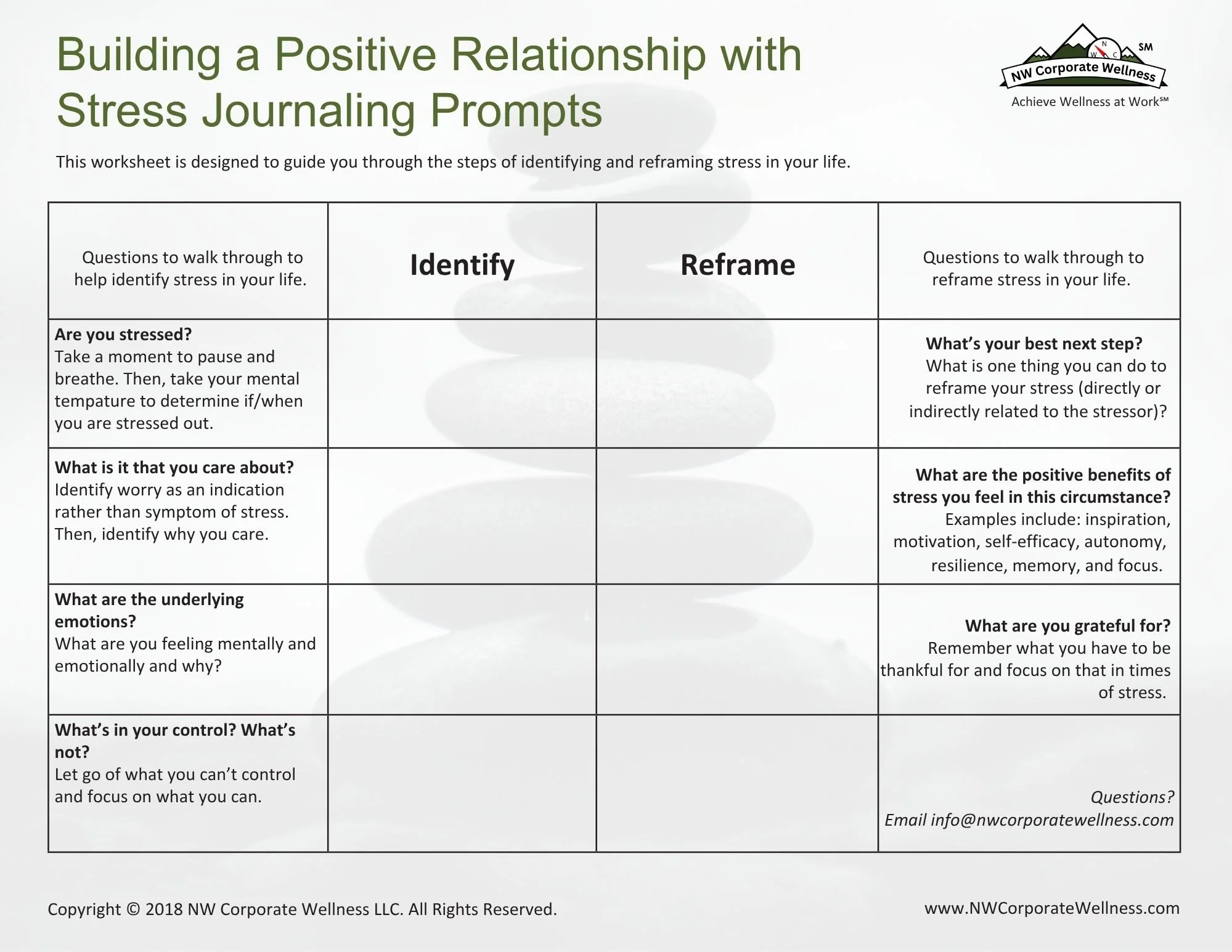
The Building a Positive Relationship with Stress Journaling Prompts worksheet encourages individuals to identify stressors, reflect on emotions, and reframe stressful experiences in a healthier, more productive way.

Click link to download journal: https://drive.google.com/file/d/14DpBwZSXmyVJtxJOsY1ft1ezUrNzvR1g/view?usp=drive_link

Start by Identifying Stress

The first step is awareness. The worksheet encourages individuals to pause, breathe, and check in with themselves by asking:

  • Are you stressed?

  • What are the underlying emotions?

  • What is within your control, and what is not?

Taking a moment to reflect can help reduce overwhelm and create space for clearer thinking.

Reframing Stress

Once stress is identified, the next step is reframing it. Rather than seeing stress only as a problem, the guide encourages people to recognize potential positive outcomes, such as:

  • Motivation

  • Focus

  • Resilience

  • Inspiration

  • Personal growth

Stress often signals that we care deeply about something important. Shifting perspective can help transform stress into action and self-awareness.

Focus on Gratitude & Next Steps

The worksheet also highlights the importance of gratitude and identifying one small next step forward. Focusing on what you can control — rather than what you cannot — can help build confidence and emotional balance during challenging moments.

Final Thoughts

Building a healthier relationship with stress doesn’t mean eliminating it completely. It means learning how to pause, reflect, and respond with intention. Through journaling, mindfulness, and self-awareness, stress can become an opportunity for growth, resilience, and greater emotional wellbeing.
Gut Health, Your Body’s Second Brain

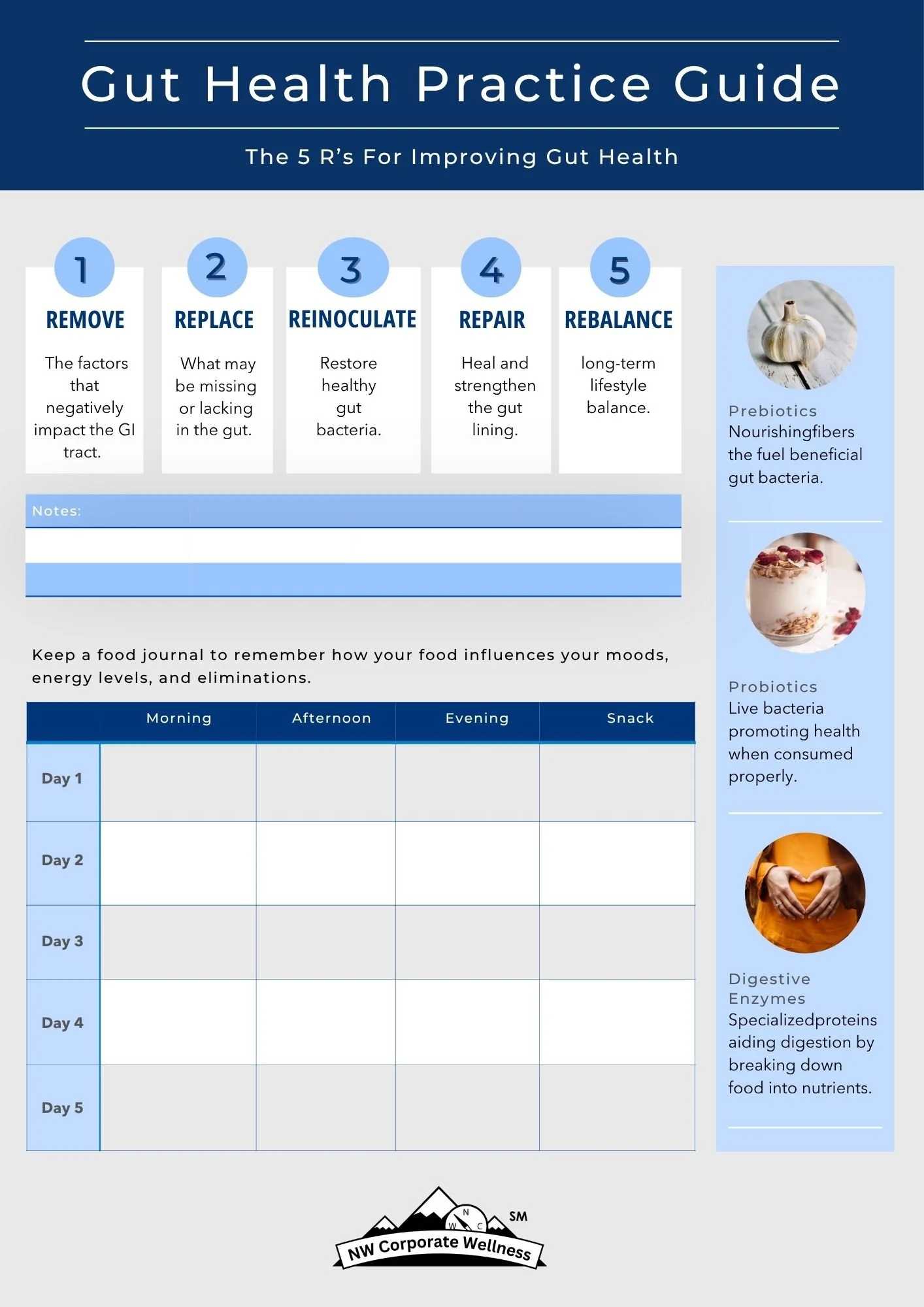
Your gut health affects more than digestion — it also impacts energy, mood, immunity, and overall wellness. The Gut Health Practice Guide introduces the 5 R’s for Improving Gut Health: Remove, Replace, Reinoculate, Repair, and Rebalance.

The 5 R’s for a Happier, Healthier Gut

Remove

Reduce foods and habits that negatively impact the digestive system, such as processed foods, excess sugar, and stress.

Replace

Support digestion with nutrients and digestive enzymes that help break food down properly.

Reinoculate

Restore healthy gut bacteria with:

  • Probiotics — beneficial live bacteria

  • Prebiotics — fibers that feed healthy bacteria

Repair

Strengthen and heal the gut lining through healthy nutrition, hydration, sleep, and stress management.

Rebalance

Focus on long-term healthy habits that support overall wellness and digestive balance.

Track Your Habits

The guide also encourages keeping a food journal to notice how foods affect your mood, energy, and digestion. Small daily habits can make a big difference in improving gut health over time.

How Gratitude Resets Our Minds, Strengthens Teams, and Makes Life Feel Fuller

In a fast-paced world, gratitude offers a simple reset. It’s more than saying thank you—it’s the practice of noticing and appreciating the good that’s already present in our lives. This awareness boosts mood, lowers stress, and increases resilience.

Why Gratitude Matters

Gratitude helps us slow down and pay attention to small moments that make life feel richer—a warm drink, a conversation, or a moment of ease. Even naming one thing you’re grateful for can shift your mindset.

It also strengthens relationships and teams. Expressing appreciation builds trust, connection, and a positive ripple effect across a workplace or community.

Finding Joy in the Small Things

You don’t need a big milestone to feel grateful. Close your eyes and think of one small joy from the past 24 hours. Notice what comes up—these micro-moments are powerful, especially on difficult days.

Simple Ways to Practice Daily

Gratitude works best when it becomes a regular habit. Try:

  • Naming 3 things you’re thankful for each morning

  • Linking gratitude to a daily cue (coffee, washing hands, logging in)

  • Writing one gratitude note per week

Choose whatever feels most natural for your routine.

Gratitude in Hard Times

Gratitude doesn’t erase challenges, but it helps us identify the strengths and supports that carry us through—perseverance, kindness, resourcefulness, or connection.

Carry It Forward

Think of gratitude as a small flame you can carry into your day. What intention do you want to bring forward from this moment?

With consistent practice, gratitude becomes more than reflection—it becomes a way of experiencing the world.