#MentalWellness

Foundational Level 1 Self-Defense Skills: Building Awareness, Confidence, and Practical Safety

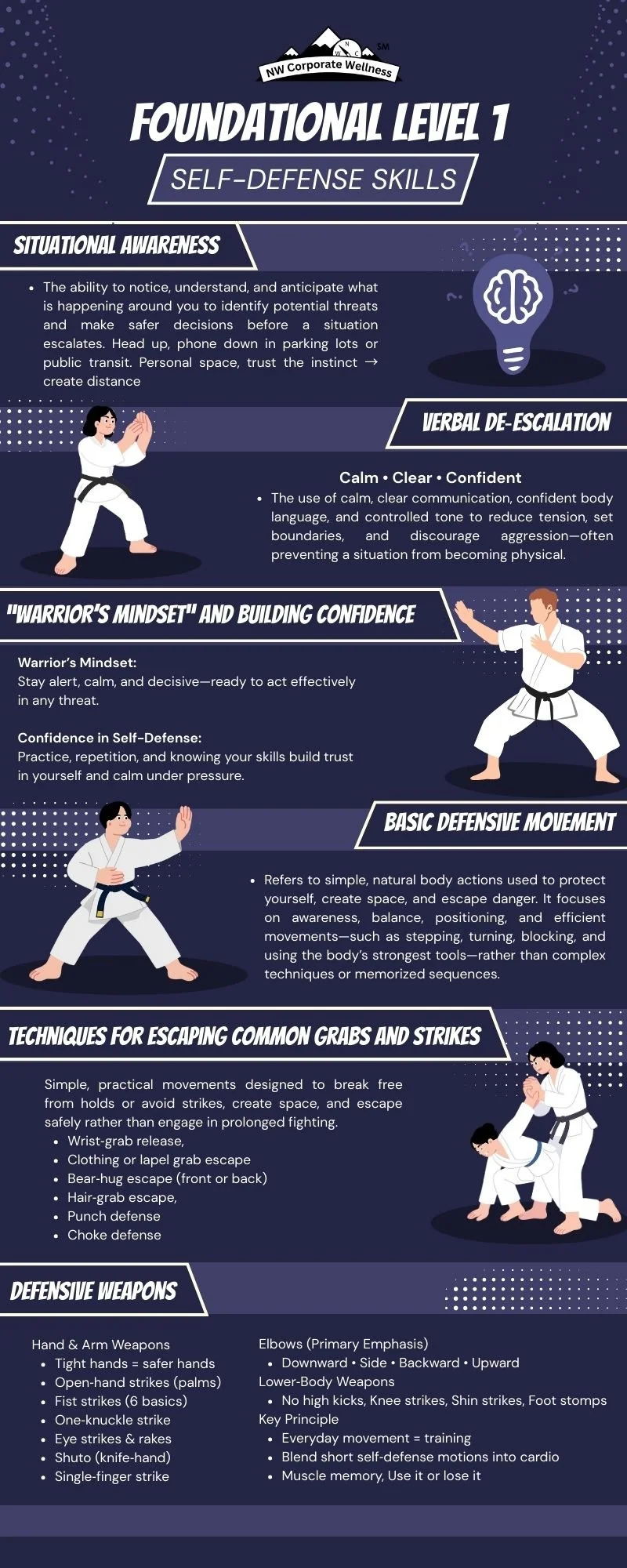
Personal safety starts with knowledge, awareness, and confidence—not fear. Our Foundational Level 1 Self-Defense Skills program is designed to empower participants with practical tools they can use immediately in everyday situations. This level focuses on prevention, clear decision-making, and simple, effective movements that prioritize escape and safety.

Below is an overview of the core principles covered in this foundational training.

Situational Awareness: Your First Line of Defense

Situational awareness is the ability to notice, understand, and anticipate what’s happening around you. This skill helps you identify potential threats early and make safe decisions before a situation escalates.

Key elements include:

  • Staying alert and minimizing distractions (head up, phone down)

  • Being aware in parking lots, public transit, and shared spaces

  • Respecting personal space

  • Trusting your instincts and creating distance when something feels off

Awareness often prevents danger before it begins.

Verbal De-Escalation: Calm, Clear, and Confident Communication

Many confrontations can be avoided or diffused through effective communication. Verbal de-escalation focuses on using calm, clear language, confident body posture, and controlled tone to reduce tension and discourage aggression.

This approach helps participants:

  • Set clear boundaries

  • Project confidence

  • Prevent situations from becoming physical whenever possible

Strong communication is a powerful safety tool.

Warrior’s Mindset and Building Confidence

Self-defense is as much mental as it is physical. Developing a “warrior’s mindset” means staying alert, calm, and decisive—ready to act if necessary without panic.

Confidence in self-defense is built through:

  • Practice and repetition

  • Understanding your capabilities

  • Learning to stay calm under pressure

Confidence changes how you carry yourself—and how others perceive you.

Basic Defensive Movement

Rather than complex techniques or memorized sequences, this training emphasizes simple, natural body movements that are easy to recall under stress.

Participants learn to:

  • Protect themselves using balance and positioning

  • Create space to escape danger

  • Use stepping, turning, blocking, and efficient movement

  • Rely on the body’s strongest tools instead of complicated techniques

The goal is safety and escape, not prolonged engagement.

Techniques for Escaping Common Grabs and Strikes

Foundational Level 1 includes practical techniques designed to break free and get to safety quickly. These movements focus on real-world scenarios and prioritize escape.

Covered techniques include:

  • Wrist-grab releases

  • Clothing or lapel grab escapes

  • Bear-hug escapes (front and back)

  • Hair-grab escapes

  • Punch defense

  • Choke defense

Each technique is designed to be simple, effective, and easy to remember.

Defensive Weapons: Using the Body Effectively

Participants are taught how to use their body as a defensive tool in a controlled and practical way.

Key concepts include:

Hand & Arm Weapons

  • Tight hands for safety

  • Open-hand (palm) strikes

  • Basic fist strikes

  • One-knuckle strikes

  • Eye strikes and rakes

  • Knife-hand (shuto) strikes

  • Single-finger strikes

Elbows (Primary Emphasis)

  • Downward, side, backward, and upward elbow strikes

Lower-Body Weapons

  • Knee strikes

  • Shin strikes

  • Foot stomps

  • No high kicks—focus stays grounded and realistic

Key Principles

  • Everyday movement equals training

  • Blending short self-defense motions into cardio and fitness

  • Building muscle memory through repetition

  • “Use it or lose it” skill retention

A Practical, Empowering Approach to Safety

This foundational program is designed to be accessible, empowering, and realistic. Participants leave with increased awareness, confidence, and practical tools they can apply immediately in daily life.

Self-defense isn’t about fighting—it’s about awareness, preparedness, and the ability to protect yourself and get home safely.

Nurturing Mental Health in the Corporate World: The Power of Mindful Meditation

In the hustle and bustle of the corporate environment, it's easy to get caught up in the endless demands of deadlines, meetings, and performance targets. However, amidst the chaos, it's essential not to overlook the importance of mental health. The well-being of employees is not just a nice-to-have; it's a crucial factor in driving productivity, creativity, and overall organizational success.

The Corporate Mental Health Crisis

In recent years, there has been growing recognition of the mental health challenges faced by employees in the corporate world. Stress, burnout, anxiety, and depression are all too common, with long hours, high-pressure work environments, and the constant drive to excel taking a toll on mental well-being.

The Role of Mindful Meditation

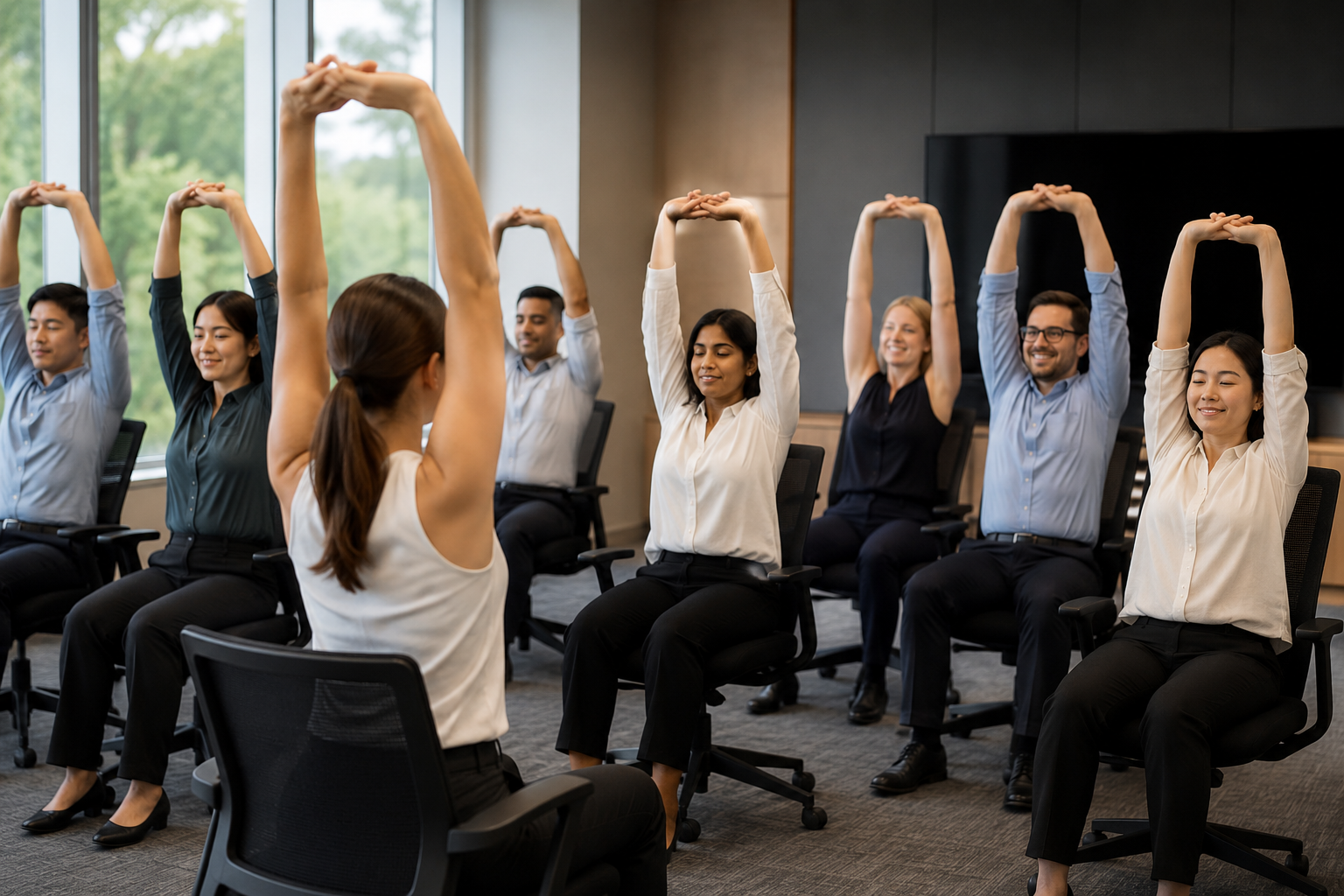
Enter mindful meditation – a simple yet powerful practice that has been shown to have profound benefits for mental health. Mindful meditation involves focusing your attention on the present moment, observing your thoughts and feelings without judgment, and cultivating a sense of calm and inner peace. Mindful meditation at work? We can’t think of a better way to start a meeting or leadership event!

Benefits of Mindful Meditation in the Corporate Setting

Stress Reduction: Mindful meditation is a potent antidote to stress. By practicing mindfulness, employees can learn to manage stress more effectively, reduce anxiety levels, and cultivate a greater sense of calm amidst the chaos of the corporate world.

Improved Focus and Concentration: In today's fast-paced work environment, maintaining focus and concentration can be a challenge. Mindful meditation helps sharpen the mind, enhance cognitive function, and improve attentional control, enabling employees to work more efficiently and productively.

Enhanced Emotional Resilience: Building emotional resilience is essential for navigating the ups and downs of corporate life. Mindful meditation equips employees with the tools to cope with adversity, bounce back from setbacks, and maintain a positive outlook even in challenging circumstances.

Better Decision-Making: Clarity of mind is crucial for making sound decisions. By practicing mindful meditation, employees can clear mental clutter, gain perspective, and make decisions with greater clarity and insight.

Promotion of a Positive Work Culture: When employees prioritize their mental health, it creates a ripple effect throughout the organization. A workplace culture that values well-being fosters greater employee satisfaction, engagement, and loyalty, ultimately leading to a more positive and productive work environment.

Incorporating Mindful Meditation into the Workplace

Employers can play a pivotal role in promoting mental health and well-being by introducing mindful meditation programs in the workplace. From offering mindfulness workshops and guided meditation sessions to providing access to meditation apps and creating dedicated quiet spaces for reflection, there are numerous ways organizations can support their employees' mental health journey. 

If you’re looking for a corporate wellness partner with high quality, reliable, and professional team members email us at info@nwcorporateyoga.com to learn more.