#StressManagement

Chair Stretch Reset: A Quick Feel-Better-at-Work Routine

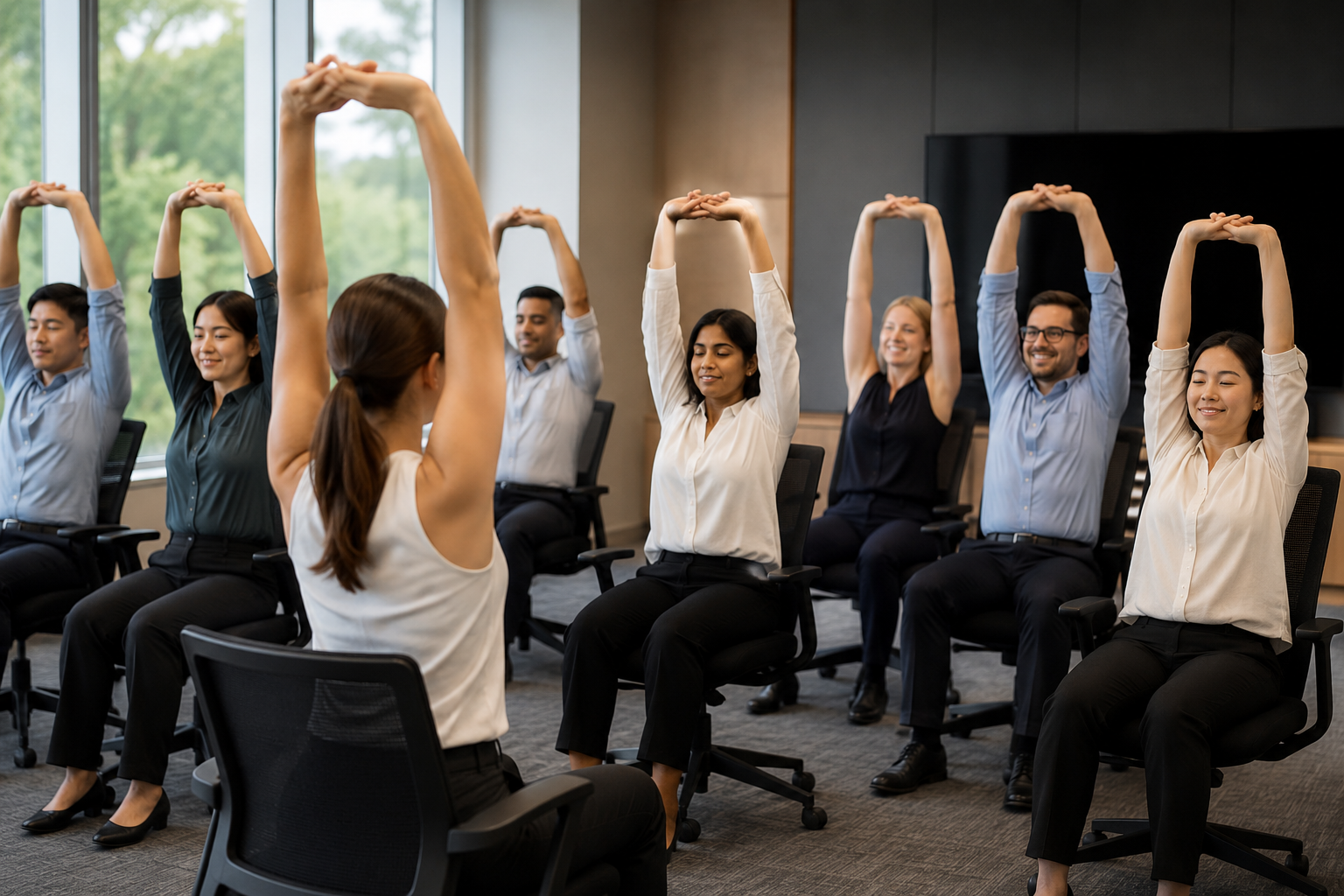
Spending long periods at a desk can leave your neck, shoulders, back, wrists, hips, and legs feeling stiff. This short seated routine is designed to help you reset without leaving your chair. Move slowly, stay within a comfortable range, and skip anything that doesn’t feel right.

Start With Your Breath

Sit toward the front or middle of your chair with both feet flat on the floor, about hip-width apart. Rest your hands on your thighs and let your spine lengthen naturally.

Take a slow breath in through your nose.

Exhale gently.

Take one more comfortable breath in, and slowly breathe out.

1. Shoulder Rolls

Inhale and lift your shoulders toward your ears.

Exhale as you roll them back and down.

Repeat slowly for about 5 rounds, allowing the movement to stay smooth and relaxed.

2. Shoulder-Blade Squeeze

Bring your arms beside your body with your elbows bent.

Gently draw your elbows back, bringing your shoulder blades toward one another.

Keep your shoulders relaxed.

Hold for one comfortable breath, then release.

Repeat 3 times.

3. Neck Mobility

Rest your hands on your thighs and keep your shoulders level.

Slowly turn your head to look over your right shoulder. Return to center.

Turn toward your left shoulder. Return to center.

Repeat once more on each side.

Then bring your right ear gently toward your right shoulder. Return to center.

Repeat on the left side.

Complete 2 rounds on each side.

4. Wrist & Hand Relief

Extend your hands comfortably in front of you.

Open your fingers wide, then gently make a fist.

Repeat 5 times.

Circle your wrists slowly in one direction, then reverse.

Gently shake out your hands.

Bring your palms together and lower your hands slightly until you feel a comfortable stretch through the wrists or forearms.

Take one breath, then release.

5. Seated Spinal Mobility

Place your hands on your thighs.

As you inhale, gently lift your chest and allow your shoulders to move slightly back.

As you exhale, round your upper back and let your chin move slightly toward your chest.

Continue for 5 slow rounds.

Then return to neutral.

Place your right hand on your left thigh and gently rotate your chest toward the left. Keep both feet grounded.

Take one comfortable breath and return to center.

Repeat on the other side.

6. Seated Lower-Body Reset

Sit tall with both feet on the floor.

Lift your right foot slightly, lower it, then lift your left.

Continue alternating in a gentle seated march for about 20 seconds.

Next, extend one foot slightly forward.

Point your toes away, then draw them toward you.

Repeat 3 times, then circle your ankle.

Switch sides and repeat.

Finish With Your Breath

Return both feet to the floor and rest your hands on your thighs.

Soften your gaze or close your eyes if comfortable.

Breathe in slowly through your nose for a count of four:

1… 2… 3… 4

Exhale for four:

1… 2… 3… 4

Repeat for 3 slow rounds.

As you breathe, relax your jaw, soften your hands, and let your shoulders drop.

Before returning to your day, notice how your body feels. Even a few minutes of gentle movement and breathing can help you feel more refreshed, mobile, and aware.
Building a Positive Relationship with Stress

Stress is a natural part of life, but the way we respond to it can make all the difference. Instead of viewing stress as something purely negative, we can learn to better understand it, manage it, and even use it as a tool for growth.

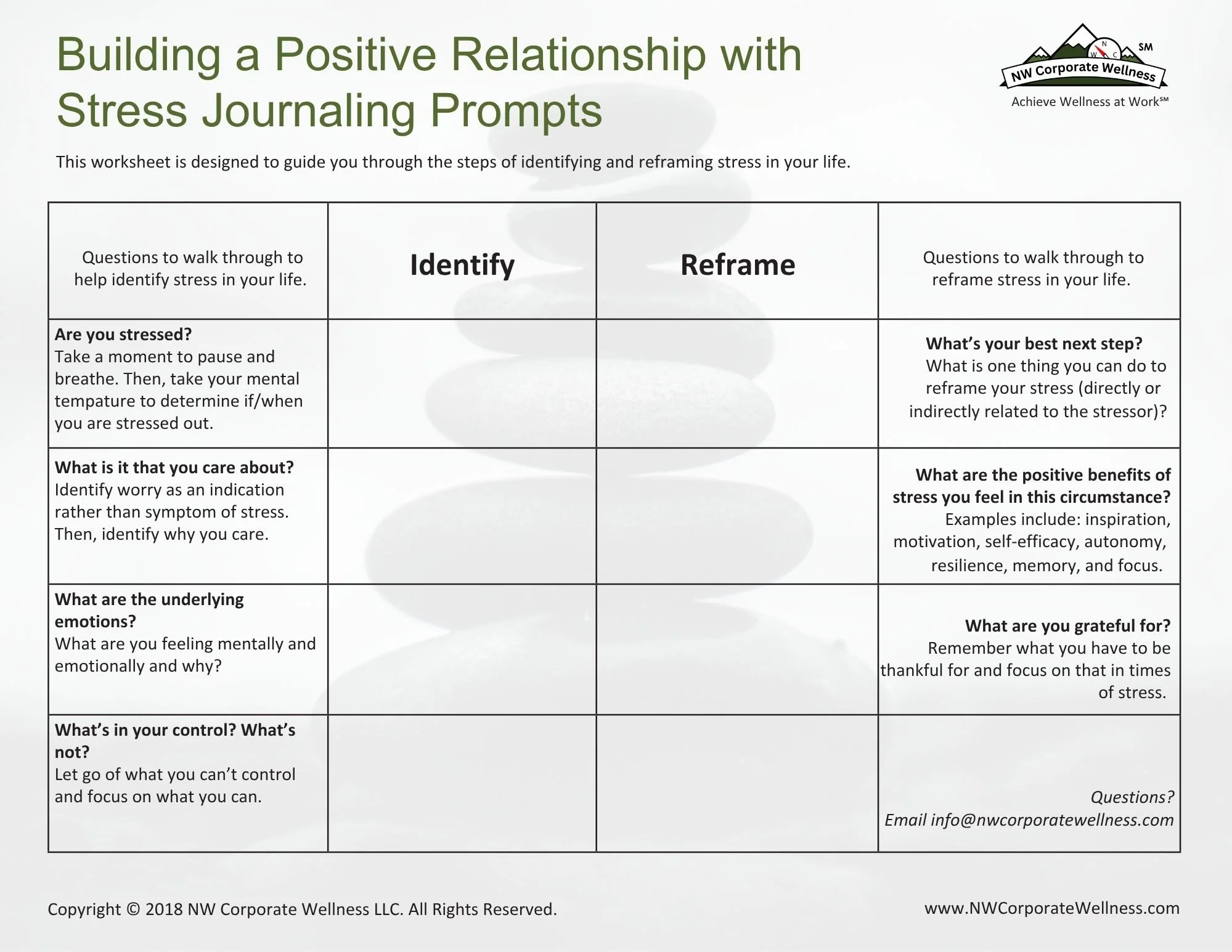
The Building a Positive Relationship with Stress Journaling Prompts worksheet encourages individuals to identify stressors, reflect on emotions, and reframe stressful experiences in a healthier, more productive way.

Click link to download journal: https://drive.google.com/file/d/14DpBwZSXmyVJtxJOsY1ft1ezUrNzvR1g/view?usp=drive_link

Start by Identifying Stress

The first step is awareness. The worksheet encourages individuals to pause, breathe, and check in with themselves by asking:

  • Are you stressed?

  • What are the underlying emotions?

  • What is within your control, and what is not?

Taking a moment to reflect can help reduce overwhelm and create space for clearer thinking.

Reframing Stress

Once stress is identified, the next step is reframing it. Rather than seeing stress only as a problem, the guide encourages people to recognize potential positive outcomes, such as:

  • Motivation

  • Focus

  • Resilience

  • Inspiration

  • Personal growth

Stress often signals that we care deeply about something important. Shifting perspective can help transform stress into action and self-awareness.

Focus on Gratitude & Next Steps

The worksheet also highlights the importance of gratitude and identifying one small next step forward. Focusing on what you can control — rather than what you cannot — can help build confidence and emotional balance during challenging moments.

Final Thoughts

Building a healthier relationship with stress doesn’t mean eliminating it completely. It means learning how to pause, reflect, and respond with intention. Through journaling, mindfulness, and self-awareness, stress can become an opportunity for growth, resilience, and greater emotional wellbeing.

Gut Health, Your Body’s Second Brain

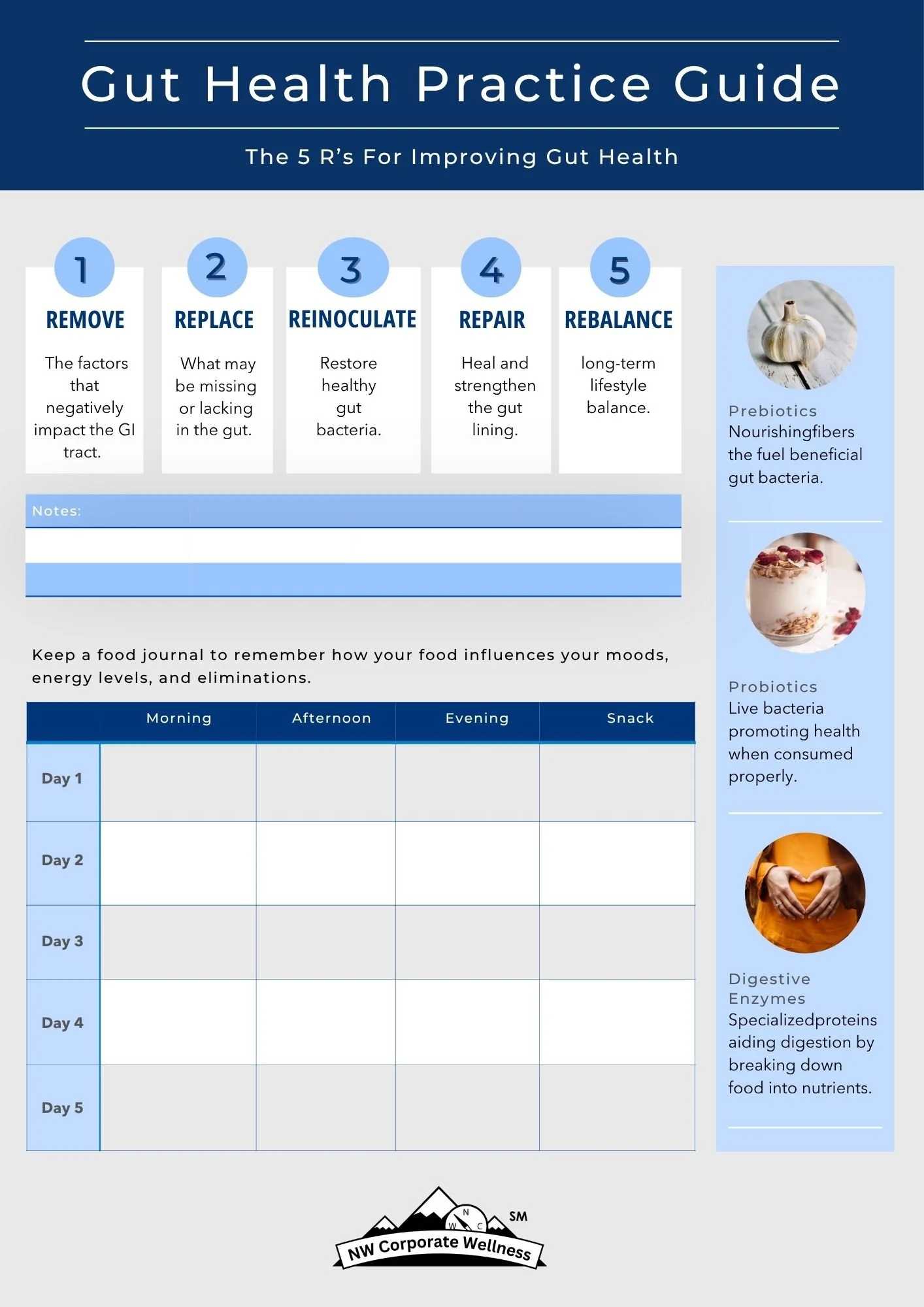
Your gut health affects more than digestion — it also impacts energy, mood, immunity, and overall wellness. The Gut Health Practice Guide introduces the 5 R’s for Improving Gut Health: Remove, Replace, Reinoculate, Repair, and Rebalance.

The 5 R’s for a Happier, Healthier Gut

Remove

Reduce foods and habits that negatively impact the digestive system, such as processed foods, excess sugar, and stress.

Replace

Support digestion with nutrients and digestive enzymes that help break food down properly.

Reinoculate

Restore healthy gut bacteria with:

  • Probiotics — beneficial live bacteria

  • Prebiotics — fibers that feed healthy bacteria

Repair

Strengthen and heal the gut lining through healthy nutrition, hydration, sleep, and stress management.

Rebalance

Focus on long-term healthy habits that support overall wellness and digestive balance.

Track Your Habits

The guide also encourages keeping a food journal to notice how foods affect your mood, energy, and digestion. Small daily habits can make a big difference in improving gut health over time.

Foundational Level 1 Self-Defense Skills: Building Awareness, Confidence, and Practical Safety

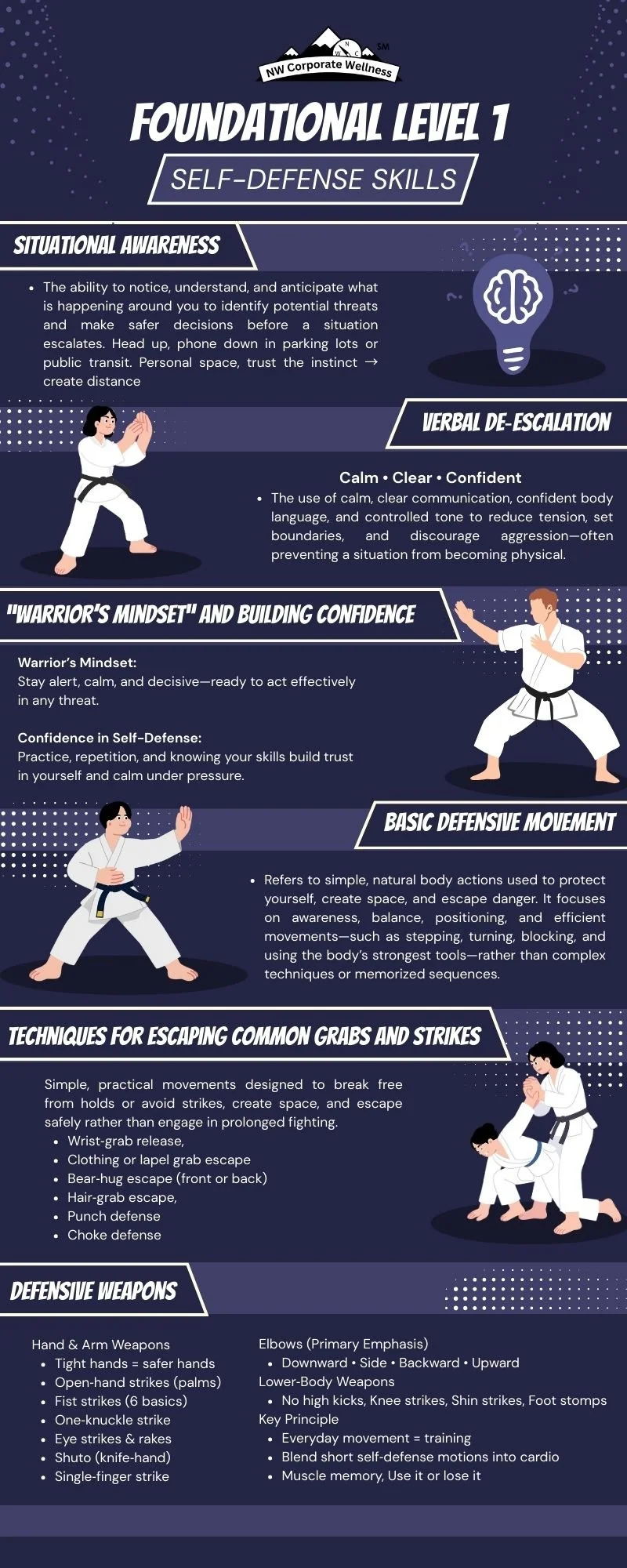
Personal safety starts with knowledge, awareness, and confidence—not fear. Our Foundational Level 1 Self-Defense Skills program is designed to empower participants with practical tools they can use immediately in everyday situations. This level focuses on prevention, clear decision-making, and simple, effective movements that prioritize escape and safety.

Below is an overview of the core principles covered in this foundational training.

Situational Awareness: Your First Line of Defense

Situational awareness is the ability to notice, understand, and anticipate what’s happening around you. This skill helps you identify potential threats early and make safe decisions before a situation escalates.

Key elements include:

  • Staying alert and minimizing distractions (head up, phone down)

  • Being aware in parking lots, public transit, and shared spaces

  • Respecting personal space

  • Trusting your instincts and creating distance when something feels off

Awareness often prevents danger before it begins.

Verbal De-Escalation: Calm, Clear, and Confident Communication

Many confrontations can be avoided or diffused through effective communication. Verbal de-escalation focuses on using calm, clear language, confident body posture, and controlled tone to reduce tension and discourage aggression.

This approach helps participants:

  • Set clear boundaries

  • Project confidence

  • Prevent situations from becoming physical whenever possible

Strong communication is a powerful safety tool.

Warrior’s Mindset and Building Confidence

Self-defense is as much mental as it is physical. Developing a “warrior’s mindset” means staying alert, calm, and decisive—ready to act if necessary without panic.

Confidence in self-defense is built through:

  • Practice and repetition

  • Understanding your capabilities

  • Learning to stay calm under pressure

Confidence changes how you carry yourself—and how others perceive you.

Basic Defensive Movement

Rather than complex techniques or memorized sequences, this training emphasizes simple, natural body movements that are easy to recall under stress.

Participants learn to:

  • Protect themselves using balance and positioning

  • Create space to escape danger

  • Use stepping, turning, blocking, and efficient movement

  • Rely on the body’s strongest tools instead of complicated techniques

The goal is safety and escape, not prolonged engagement.

Techniques for Escaping Common Grabs and Strikes

Foundational Level 1 includes practical techniques designed to break free and get to safety quickly. These movements focus on real-world scenarios and prioritize escape.

Covered techniques include:

  • Wrist-grab releases

  • Clothing or lapel grab escapes

  • Bear-hug escapes (front and back)

  • Hair-grab escapes

  • Punch defense

  • Choke defense

Each technique is designed to be simple, effective, and easy to remember.

Defensive Weapons: Using the Body Effectively

Participants are taught how to use their body as a defensive tool in a controlled and practical way.

Key concepts include:

Hand & Arm Weapons

  • Tight hands for safety

  • Open-hand (palm) strikes

  • Basic fist strikes

  • One-knuckle strikes

  • Eye strikes and rakes

  • Knife-hand (shuto) strikes

  • Single-finger strikes

Elbows (Primary Emphasis)

  • Downward, side, backward, and upward elbow strikes

Lower-Body Weapons

  • Knee strikes

  • Shin strikes

  • Foot stomps

  • No high kicks—focus stays grounded and realistic

Key Principles

  • Everyday movement equals training

  • Blending short self-defense motions into cardio and fitness

  • Building muscle memory through repetition

  • “Use it or lose it” skill retention

A Practical, Empowering Approach to Safety

This foundational program is designed to be accessible, empowering, and realistic. Participants leave with increased awareness, confidence, and practical tools they can apply immediately in daily life.

Self-defense isn’t about fighting—it’s about awareness, preparedness, and the ability to protect yourself and get home safely.

How Gratitude Resets Our Minds, Strengthens Teams, and Makes Life Feel Fuller

In a fast-paced world, gratitude offers a simple reset. It’s more than saying thank you—it’s the practice of noticing and appreciating the good that’s already present in our lives. This awareness boosts mood, lowers stress, and increases resilience.

Why Gratitude Matters

Gratitude helps us slow down and pay attention to small moments that make life feel richer—a warm drink, a conversation, or a moment of ease. Even naming one thing you’re grateful for can shift your mindset.

It also strengthens relationships and teams. Expressing appreciation builds trust, connection, and a positive ripple effect across a workplace or community.

Finding Joy in the Small Things

You don’t need a big milestone to feel grateful. Close your eyes and think of one small joy from the past 24 hours. Notice what comes up—these micro-moments are powerful, especially on difficult days.

Simple Ways to Practice Daily

Gratitude works best when it becomes a regular habit. Try:

  • Naming 3 things you’re thankful for each morning

  • Linking gratitude to a daily cue (coffee, washing hands, logging in)

  • Writing one gratitude note per week

Choose whatever feels most natural for your routine.

Gratitude in Hard Times

Gratitude doesn’t erase challenges, but it helps us identify the strengths and supports that carry us through—perseverance, kindness, resourcefulness, or connection.

Carry It Forward

Think of gratitude as a small flame you can carry into your day. What intention do you want to bring forward from this moment?

With consistent practice, gratitude becomes more than reflection—it becomes a way of experiencing the world.

Maximizing Exercise in a Busy Schedule: Embracing Micro Workouts

In today's fast-paced world, finding time for exercise can often feel like an impossible task. Between work, family responsibilities, and other commitments, the idea of fitting in a full workout session can seem daunting. However, there's a solution that's gaining traction among fitness enthusiasts – micro workouts.

What are Micro Workouts?

Micro workouts, as the name suggests, are short bursts of exercise that can be squeezed into even the busiest of schedules. Unlike traditional workouts that require dedicated blocks of time, micro workouts are brief, yet effective sessions that target specific muscle groups or fitness goals. They can be done in the office or virtually as well as a part of workplace wellness programs. 

Benefits of Micro Workouts

Time Efficiency: One of the most significant advantages of micro workouts is their time efficiency. Whether you have five minutes or fifteen, you can make the most of every spare moment by incorporating quick exercise routines into your day.

Consistency: Consistency is key when it comes to seeing results from your fitness regimen. Micro workouts make it easier to stay consistent by eliminating the need for lengthy gym sessions. By integrating short bursts of activity into your daily routine, you can maintain your momentum and keep moving towards your fitness goals. Offering weekly or bi-weekly fitness classes at work supports employees in their routine planning as well. 

Improved Energy and Focus: Research has shown that even brief periods of exercise can boost energy levels and enhance cognitive function. By incorporating micro workouts into your day, you can experience a natural surge of vitality and mental clarity that will help you tackle whatever challenges come your way.

Tips for Incorporating Micro Workouts

Identify Opportunities: Take a closer look at your daily schedule and identify pockets of time where you can sneak in a quick workout. Whether it's during your lunch break, while waiting for dinner to cook, or before hopping in the shower, there are likely several opportunities throughout the day to fit in a micro workout. Talk to your employer about employee wellness programs so it’s free! 

Choose Efficient Exercises: Focus on exercises that provide maximum benefit in minimal time. High-intensity interval training (HIIT) routines, bodyweight exercises, and quick cardio circuits are all excellent options for micro workouts.

Keep it Varied: Variety is the spice of life – and the key to preventing workout boredom. Mix up your micro workouts by incorporating a variety of exercises and movements to keep things interesting and challenge your body in new ways.

Listen to Your Body: While micro workouts are designed to be short and intense, it's essential to listen to your body and avoid overdoing it. Pay attention to how you're feeling, and adjust the intensity or duration of your workouts accordingly.


Embrace Micro Workouts: Make Exercise Fit Your Busy Life


Don't let a busy schedule be an excuse to neglect your fitness goals. With micro workouts, you can make exercise a priority, no matter how hectic your life may be. By embracing short bursts of activity throughout the day, you'll not only improve your physical health but also boost your energy, focus, and overall well-being.

So, why wait? Lace up your sneakers, carve out a few minutes in your day, and start reaping the benefits of micro workouts today. Your body and mind will thank you for it.

Nurturing Mental Health in the Corporate World: The Power of Mindful Meditation

In the hustle and bustle of the corporate environment, it's easy to get caught up in the endless demands of deadlines, meetings, and performance targets. However, amidst the chaos, it's essential not to overlook the importance of mental health. The well-being of employees is not just a nice-to-have; it's a crucial factor in driving productivity, creativity, and overall organizational success.

The Corporate Mental Health Crisis

In recent years, there has been growing recognition of the mental health challenges faced by employees in the corporate world. Stress, burnout, anxiety, and depression are all too common, with long hours, high-pressure work environments, and the constant drive to excel taking a toll on mental well-being.

The Role of Mindful Meditation

Enter mindful meditation – a simple yet powerful practice that has been shown to have profound benefits for mental health. Mindful meditation involves focusing your attention on the present moment, observing your thoughts and feelings without judgment, and cultivating a sense of calm and inner peace. Mindful meditation at work? We can’t think of a better way to start a meeting or leadership event!

Benefits of Mindful Meditation in the Corporate Setting

Stress Reduction: Mindful meditation is a potent antidote to stress. By practicing mindfulness, employees can learn to manage stress more effectively, reduce anxiety levels, and cultivate a greater sense of calm amidst the chaos of the corporate world.

Improved Focus and Concentration: In today's fast-paced work environment, maintaining focus and concentration can be a challenge. Mindful meditation helps sharpen the mind, enhance cognitive function, and improve attentional control, enabling employees to work more efficiently and productively.

Enhanced Emotional Resilience: Building emotional resilience is essential for navigating the ups and downs of corporate life. Mindful meditation equips employees with the tools to cope with adversity, bounce back from setbacks, and maintain a positive outlook even in challenging circumstances.

Better Decision-Making: Clarity of mind is crucial for making sound decisions. By practicing mindful meditation, employees can clear mental clutter, gain perspective, and make decisions with greater clarity and insight.

Promotion of a Positive Work Culture: When employees prioritize their mental health, it creates a ripple effect throughout the organization. A workplace culture that values well-being fosters greater employee satisfaction, engagement, and loyalty, ultimately leading to a more positive and productive work environment.

Incorporating Mindful Meditation into the Workplace

Employers can play a pivotal role in promoting mental health and well-being by introducing mindful meditation programs in the workplace. From offering mindfulness workshops and guided meditation sessions to providing access to meditation apps and creating dedicated quiet spaces for reflection, there are numerous ways organizations can support their employees' mental health journey. 

If you’re looking for a corporate wellness partner with high quality, reliable, and professional team members email us at info@nwcorporateyoga.com to learn more.