

Stress is a natural part of life, but the way we respond to it can make all the difference. Instead of viewing stress as something purely negative, we can learn to better understand it, manage it, and even use it as a tool for growth.
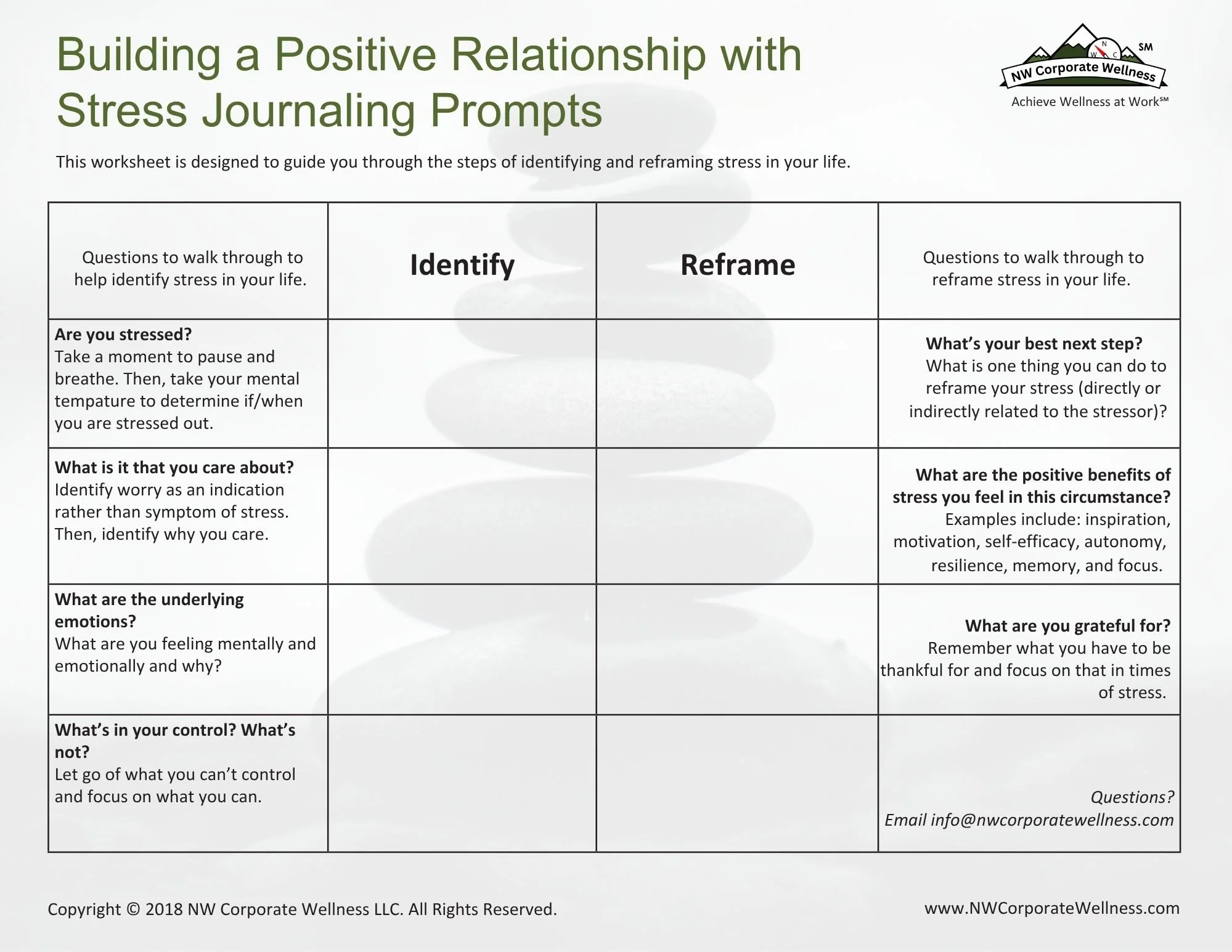
The Building a Positive Relationship with Stress Journaling Prompts worksheet encourages individuals to identify stressors, reflect on emotions, and reframe stressful experiences in a healthier, more productive way.
Click link to download journal: https://drive.google.com/file/d/14DpBwZSXmyVJtxJOsY1ft1ezUrNzvR1g/view?usp=drive_link
Start by Identifying Stress
The first step is awareness. The worksheet encourages individuals to pause, breathe, and check in with themselves by asking:
Are you stressed?
What are the underlying emotions?
What is within your control, and what is not?
Taking a moment to reflect can help reduce overwhelm and create space for clearer thinking.
Reframing Stress
Once stress is identified, the next step is reframing it. Rather than seeing stress only as a problem, the guide encourages people to recognize potential positive outcomes, such as:
Motivation
Focus
Resilience
Inspiration
Personal growth
Stress often signals that we care deeply about something important. Shifting perspective can help transform stress into action and self-awareness.
Focus on Gratitude & Next Steps
The worksheet also highlights the importance of gratitude and identifying one small next step forward. Focusing on what you can control — rather than what you cannot — can help build confidence and emotional balance during challenging moments.
Final Thoughts
Building a healthier relationship with stress doesn’t mean eliminating it completely. It means learning how to pause, reflect, and respond with intention. Through journaling, mindfulness, and self-awareness, stress can become an opportunity for growth, resilience, and greater emotional wellbeing.