
Modern workdays often involve long hours at a desk, on screens, or on mobile devices. Over time, poor posture, limited movement, and low body awareness can contribute to neck pain, back tension, headaches, and reduced mobility.
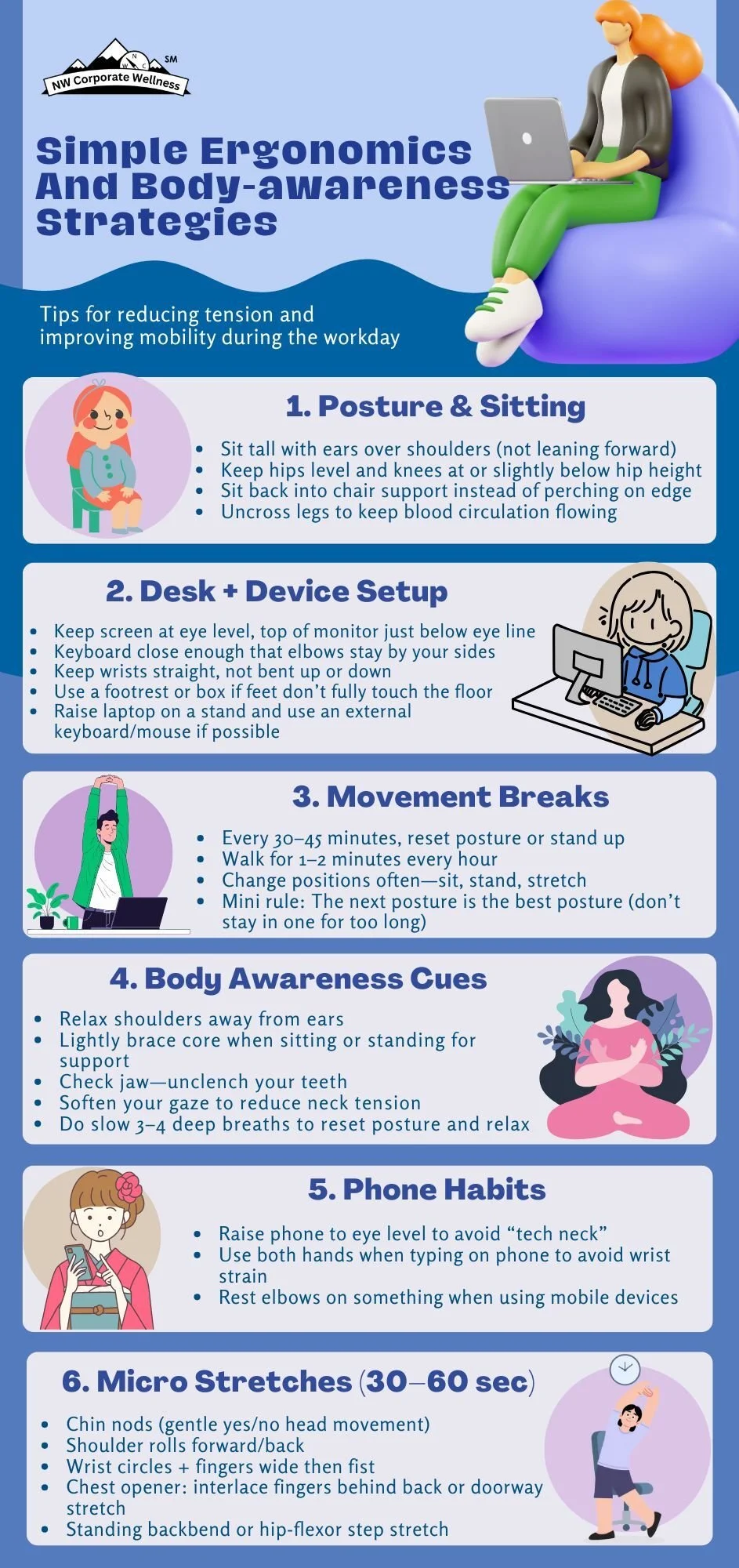
At NW Corporate Wellness, we believe small, intentional changes throughout the workday can have a big impact on how your body feels and performs. Below are simple ergonomics and body-awareness strategies you can start using right away to reduce tension, improve comfort, and support long-term wellbeing at work.
1. Posture & Sitting Habits
Good posture isn’t about sitting perfectly still—it’s about supporting your body efficiently.
Sit tall with your ears stacked over your shoulders (avoid leaning forward)
Keep hips level and knees at or slightly below hip height
Sit back into the chair for support rather than perching on the edge
Uncross your legs periodically to promote healthy circulation
💡 Tip: If you catch yourself slouching, gently reset your posture rather than forcing stiffness.
2. Desk & Device Setup
An ergonomic workstation helps minimize strain on your neck, shoulders, and wrists.
Position your screen at eye level, with the top of the monitor just below your eye line
Keep your keyboard close so elbows stay relaxed by your sides
Maintain neutral wrists—avoid bending them up or down
Use a footrest or box if your feet don’t comfortably reach the floor
If using a laptop, raise it on a stand and use an external keyboard and mouse when possible
Even small adjustments to desk height or screen position can significantly reduce daily discomfort.
3. Movement Breaks Matter
The best posture is your next posture. Staying in one position too long—no matter how “correct”—can lead to stiffness and fatigue.
Every 30–45 minutes, reset your posture or stand up
Walk for 1–2 minutes every hour
Change positions often: sit, stand, stretch
Avoid staying in any one posture for extended periods
Regular movement keeps joints lubricated, muscles engaged, and energy levels up.
4. Body Awareness Cues
Body awareness helps you notice tension before it turns into pain.
Relax your shoulders away from your ears
Lightly brace your core when sitting or standing for support
Check your jaw—unclench your teeth
Soften your gaze to reduce neck and eye strain
Take 3–4 slow, deep breaths to reset posture and calm your nervous system
These quick check-ins can be done anywhere, anytime.
5. Healthier Phone Habits
Mobile devices are a major contributor to neck and wrist strain.
Raise your phone to eye level to avoid “tech neck”
Use both hands when typing to reduce wrist strain
Rest your elbows on a surface when using mobile devices
Small changes in phone positioning can prevent chronic discomfort over time.
6. Micro Stretches (30–60 Seconds)
Short stretches sprinkled throughout the day help release tension and restore mobility.
Try these quick movements:
Chin nods (gentle “yes” and “no” motions)
Shoulder rolls forward and backward
Wrist circles; open fingers wide then make a fist
Chest opener: interlace fingers behind your back or use a doorway stretch
Standing backbend or hip-flexor step stretch
No special equipment needed—just a minute of mindful movement.
Supporting Wellness at Work
Creating a healthier workday doesn’t require a full overhaul. Consistent, simple habits—combined with thoughtful ergonomics and regular movement—can dramatically improve how employees feel and function.
At NW Corporate Wellness, we support organizations with:
Ergonomic education sessions
Movement and mobility workshops
On-site and virtual wellness programs
Massage and body-based recovery services
If you’re interested in bringing these strategies to your workplace, we’d love to help.
👉 Contact us to learn more about our corporate wellness offerings.